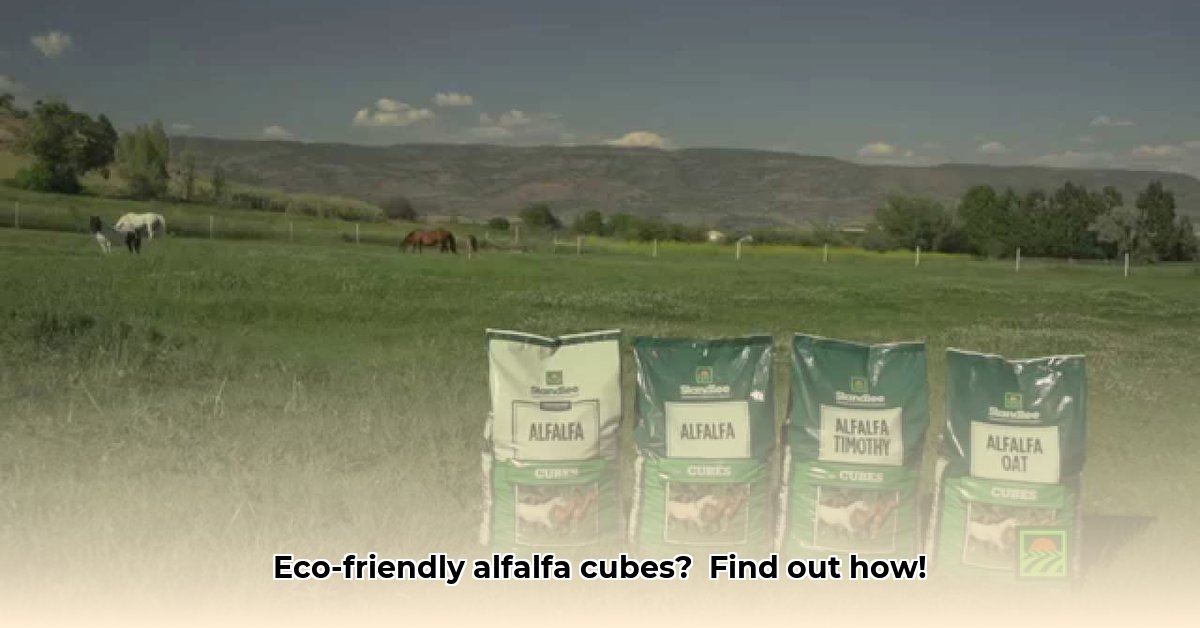
Finding high-quality, sustainable feed for livestock is a growing concern for farmers and consumers alike. Alfalfa cubes, a convenient and nutritious option, are increasingly popular, with Standlee Premium Western Forage a prominent brand available at Tractor Supply. For more information on products available at Tractor Supply, check out this page. This article examines the sustainability of Standlee alfalfa cubes, considering the challenges in obtaining comprehensive data and offering actionable recommendations for stakeholders.
Assessing the Sustainability of Standlee Alfalfa Cubes
Determining the true environmental impact of Standlee alfalfa cubes is complex. While the compressed cube format offers advantages in reduced transportation costs and waste compared to traditional bales, a complete picture requires a thorough Life Cycle Assessment (LCA). However, a comprehensive LCA is currently hampered by a lack of publicly available data regarding Standlee's farming practices, transportation methods, and packaging materials. This data scarcity significantly limits the ability to definitively assess their overall sustainability.
The Alfalfa Cube's Life Cycle: From Field to Feed Trough
The life cycle of an alfalfa cube encompasses several stages: cultivation, harvesting, processing, packaging, transportation, and eventual disposal. Each stage contributes to the product's overall environmental footprint. Factors such as irrigation methods, fertilizer use, transportation distances, and packaging material choices all significantly influence the environmental impact. Sustainable farming practices—such as water-efficient irrigation and soil health management—would mitigate negative effects, but data on Standlee's implementation of these practices remains limited. The distance transported is another crucial factor. Locally-sourced alfalfa clearly has lower emissions than that transported across large distances.
Stakeholder Perspectives and Actions for Sustainable Alfalfa Production
Several stakeholders have a critical role in promoting more sustainable alfalfa cube production and consumption:
Standlee Premium Forage: Increased transparency is crucial. Standlee should publicly release detailed information on their farming practices, transportation routes, packaging materials, and a full environmental impact assessment. This includes the adoption of third-party verification schemes to validate claims of sustainability. Further, committing to research into more sustainable cultivation and packaging solutions is essential.
Tractor Supply: As a major retailer, Tractor Supply can influence the sustainability of their supply chain. They should prioritize suppliers with transparent and verifiable sustainability initiatives. Actively promoting sustainably-sourced and produced products and educating consumers on these factors are major steps in increasing environmental responsibility.
Consumers: Informed consumer choices are impactful. By demanding transparency and supporting companies with strong sustainability commitments, consumers drive positive change within the industry. Choosing products with minimal packaging or those from local sources further reduces the environmental footprint.
Researchers: Independent research is essential for establishing objective evaluation methods. Independent LCAs, comparing different alfalfa production methods, would provide crucial data for evidence-based decision-making and the development of best practices. This includes research on the end-of-life management of packaging materials.
Addressing Potential Risks and Challenges
The following table summarizes potential risks associated with alfalfa cube production and corresponding mitigation strategies:
| Risk Factor | Likelihood | Impact | Mitigation Strategy |
|---|---|---|---|
| Lack of transparency in sourcing | High | High | Implement robust supply chain tracking; publish detailed sourcing maps and sustainability reports; third-party verification. |
| Unsustainable alfalfa cultivation | Medium | Medium | Partner with farmers using regenerative agriculture; invest in soil health and water conservation practices; promote biodiversity. |
| Transportation emissions | Medium | Medium | Optimize transportation routes; explore rail or other lower-emission transport; support regional sourcing and local farmers. |
| Packaging waste | Low | Low | Transition to biodegradable or compostable packaging; reduce packaging size; promote reuse and recycling programs. |
Regulatory Landscape and Future Considerations
The regulatory landscape surrounding sustainable agriculture is evolving. Proactive compliance with emerging regulations concerning sustainable farming practices, packaging, and carbon emissions is vital for companies like Standlee to maintain market viability and contribute to a more sustainable future. Anticipating future regulations and actively participating in shaping policy will be key to future success.
Conclusion: The Path to Sustainable Alfalfa Cubes
While alfalfa cubes offer convenience and nutritional benefits, achieving true sustainability requires a concerted effort from all stakeholders. Increased transparency, data availability, and further research are crucial. Only through collaborative action can the industry ensure that this essential livestock feed contributes to a healthier planet and a more sustainable agricultural system.